This was one of the most disappointing phases of our journey.
I have tried my best to bring out the most important parts of this journey. But this phase scarred us in ways I cannot explain. Even today, thinking about it feels heavy. It feels unfair. It feels unreal.
And yet…
this was Neil’s reality.
This was the phase where it felt like life suddenly decided to throw everything at him together.
Every time we thought we had somehow found our rhythm… something bigger arrived.
And this chapter…scarred us deeply.
25th August 2025.
The day before Neil’s first star birthday.
We had slowly started preparing for it. Nothing grand. Nothing extravagant. Just a small celebration for our little warrior who had already fought battles most adults wouldn’t survive.
That morning had started normally.
Neil woke up smiling. Playing. Laughing. Making sounds.
Benjamin brother had come home for the regular TPN connection change and dressing care.
And then…
just before bath time, when we lifted Neil…
his expression changed completely.
He suddenly started crying uncontrollably.
Not normal crying.
Pain.
Intense pain.
I immediately carried him close to me trying to calm him down. But the moment I touched his leg…
he screamed.
Something was clearly wrong.
And once again, I thanked God for one thing alone, Benjamin brother was there.
Because in moments like these, panic takes over before logic does.
It was around 12:30 in the afternoon.
Neil kept crying continuously. We somehow carried him, pacified him as much as possible, and rushed to the hospital.
Even in the PICU, I couldn’t place him down properly. He wasn’t straightening his leg. It almost looked twisted.
Seeing him cry like that…
I broke down too.
Because he was in pain.
And I could do absolutely nothing to take it away.
Immediately, the doctors ordered an X-ray.
And somewhere inside me, I knew…
if they were rushing for an X-ray, this was serious.
Then the X-ray came.
A femur fracture.
His tiny little thigh bone had fractured.
That tiny body, after surviving surgeries, infections, tubes, needles, and pain beyond imagination…
had now broken a bone inside it.
And all he could do was cry.
Because Neil was completely dependent on long-term TPN and was not receiving normal oral nutrition, his bone strength had become extremely weak. His body was missing many of the natural nutritional processes that help bones grow stronger in babies.
Which meant…
sometimes even a small mis-lift, a slight twist, or pressure while carrying him could cause a fracture.
There are moments in this journey where I genuinely questioned whether God understood kindness at all.
Because what exactly had Neil not endured already?
The moment the doctors said “fracture,” our birthday plans shattered quietly inside me.
We knew fracture meant a cast.
But more than the cast, I was worried about his pain.
How do you put a cast on such a tiny leg?
How do you carry him? Hold him? Comfort him?
He was already carrying so much.
Painkillers were started immediately. But every small movement still hurt him.
A broken bone hurts even adults unbearably.
This was my baby.
A baby who could not even explain where it hurt.
It was almost 3 p.m. by the time we were waiting for the ortho team to arrive.
And somewhere in between, we had already started cancelling all birthday plans mentally.
Then Dr. Dinesh called.
And he said something that stayed with us.
“Do not cancel anything. Neil deserves to celebrate his first birthday.”
He said Neil would be discharged the same night.
Honestly?
At that point, celebration meant nothing to me.
I just wanted my child to stop hurting.
But Dr. Dinesh insisted.
And looking back now…
I am grateful he did.
Around 4 p.m., the ortho team arrived.
The cast preparation started.
His tiny little leg disappeared inside that heavy cast.
It honestly felt heavier than Neil himself.
But he needed it.
To heal.
And we had no other choice.
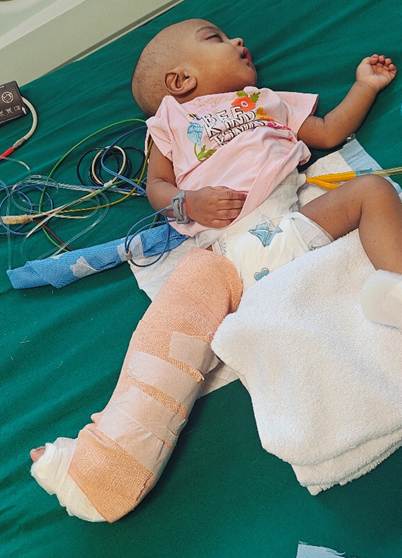
By around 10 p.m., the discharge formalities were completed.
We carried Neil home carefully, slowly learning how to hold him without hurting his fractured leg.
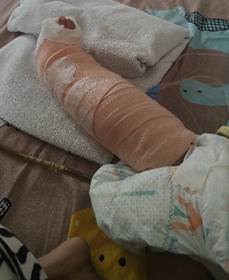
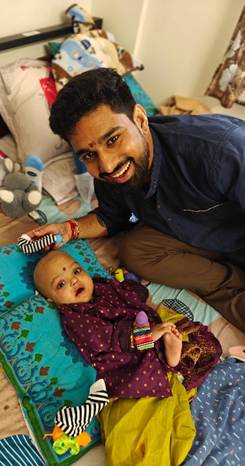
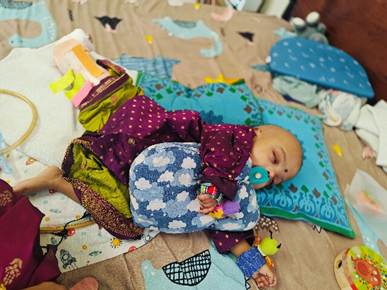
26th August 2025.
Neil’s first star birthday.
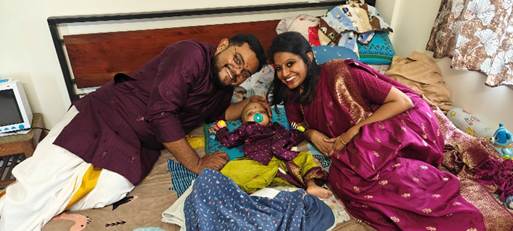
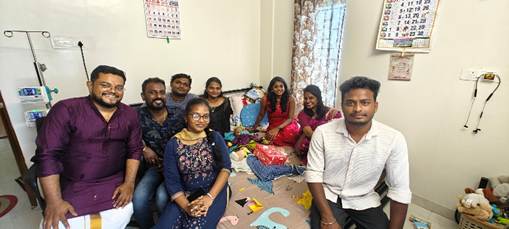
We kept it extremely small.
A simple pooja at home.
Lunch for a few people who had truly become part of Neil’s life and journey.
And thanks to Dr. Dinesh…
we celebrated.
Then came 5th September 2025.
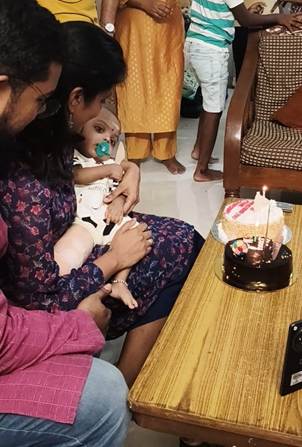
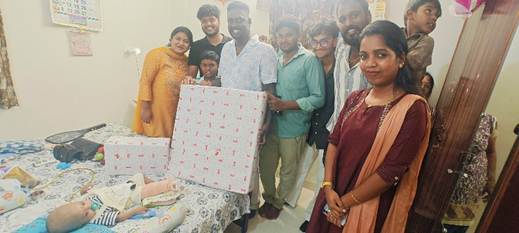
Neil turned one.
One entire year.
Even writing that now feels emotional.
Because on Day 43, when doctors had almost given up on him, we didn’t even know if reaching one year was possible.
But Neil did it.
Our little warrior turned one.
Not the kind of birthday most babies get.
No huge decorations.
No grand theme party.
No crowd.
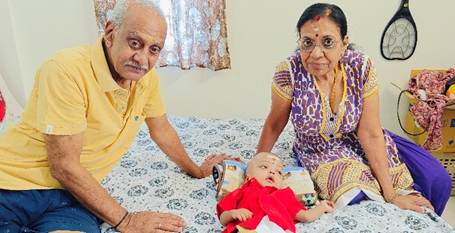
He wasn’t sitting independently. He wasn’t walking.
But none of that mattered.
Because he was here.
Alive.
With us.
And that itself felt miraculous.
We did a small cake cutting at home.
And quietly thanked life for giving us one year with him.
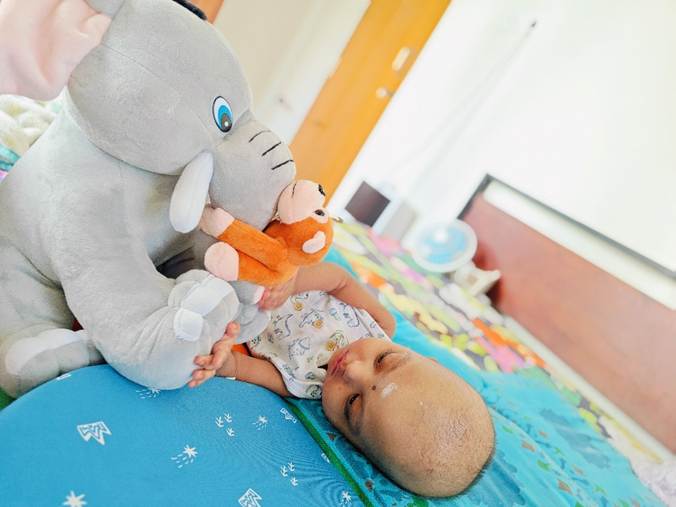
But something was changing.
Neil was becoming dull.
Very dull.
He wasn’t active anymore.
He seemed exhausted all the time.
Even while celebrating his birthday, somewhere deep inside, I knew something wasn’t right.
12th September 2025.
Fever again.
Whenever Neil developed fever, the first fear was always line infection.
Blood cultures. Blood tests. Investigations.
That became routine immediately.
The cultures initially came negative.
But his sodium levels had dropped significantly, affecting his sensorium and alertness.
Sodium supplementation was started.
And within two days, we were discharged again.
We wanted desperately to believe this was temporary.
Then around 18th September…
the fever returned.
This time it was persistent.
101…102..
Burning hot.
Neil became increasingly inactive.
As though his body simply did not have energy anymore.
At first, we wondered if the fracture pain was making him restrict movements.
But this felt different.
Deeply different.
Again we went to the hospital.
Again the fever settled temporarily.
Again we came back home.
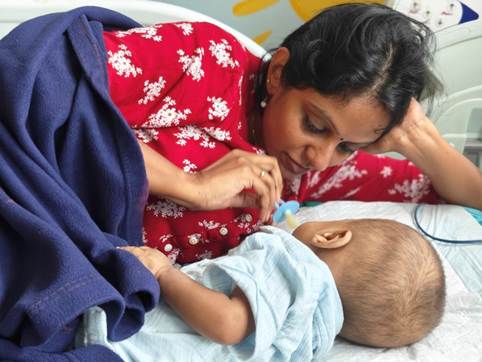
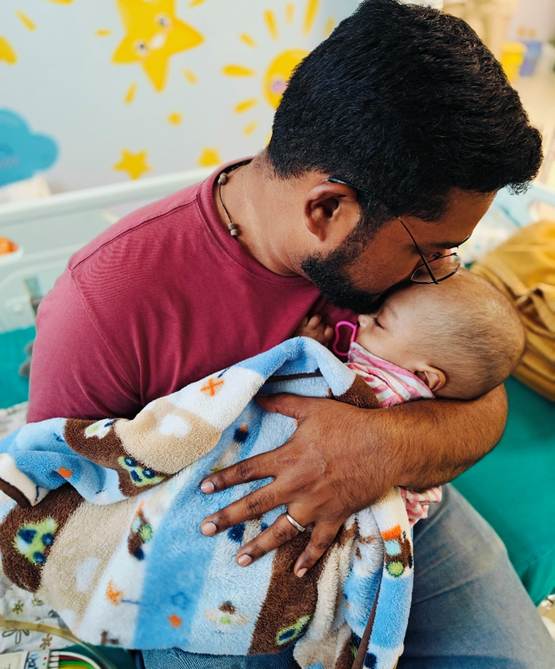
23rd September 2025.
Neil’s cast was finally removed.
The fracture had healed.
His leg was finally free.
But Neil wasn’t.
He remained dull.
Inactive.
And then the fever returned again.
Daily.
102 degrees.
Sponging became routine at home.
And then the doctors repeated blood cultures.
That report…
changed everything.
Neil had acquired a fungal bloodstream infection.
Candida Tropicalis.
A fungal blood infection is extremely dangerous because it can spread rapidly throughout the body, causing sepsis and multi-organ damage.
And immediately, one thing became clear.
The Hickman line had to come out.
Immediately.
But removing the line created another problem.
Neil was fully dependent on IV nutrition.
No oral feeds.
No bowel function adequate enough to sustain him.
Which meant he immediately needed another central line.
And securing lines on Neil was never simple.
Months of long-term catheters had already caused his blood vessels to clot aggressively.
Getting access had become one of the hardest parts of his care.
We reached the hospital around 8 p.m.
The Hickman line was removed immediately.
And then came the next day I can never forget.
25th September 2025.
There was an entire team trying to secure a central line on Neil.
Dr. Dinesh himself spent nearly three to three-and-a-half hours trying to get that line in.
Three hours.
On a tiny little child.
Trying vessel after vessel.
Access point after access point.
And finally…
he got it.
Afterward, he looked at us and said something that still echoes inside me:
“If we lose this line, we lose him.”
That line was now everything.
Nutrition. Medicines. Survival.
Everything depended on it.
At this point, life felt impossible.
Recover from fracture.
Control fungal infection.
Manage IV nutrition.
Control fever.
Manage antifungal medicines.
It felt like Neil had become a toy in God’s hands.
And we were helplessly watching.
Unlike the Hickman catheter, this central line required dressing and replacement much more frequently.
Every 7–10 days.
Every day became about protecting the line.
Protecting Neil.
We were discharged on 26th September.
And then…
72-hour cultures came positive again.
This time for a bacterial infection.
Burkholderia.
Apparently a rare bacteria.
One in a thousand cases.
At that point, I genuinely wasn’t surprised anymore that we had become that one.
Neil’s fever refused to settle.
And then Dr. Dinesh told us something important.
He wanted a PET CT scan done immediately.
PET CT is essentially a whole-body scan used to detect areas where infections, inflammations, or abnormal tissues may be localising inside the body.
This bacteria had a tendency to settle silently somewhere and start infecting that organ aggressively.
The doctors needed to know if it had localised anywhere inside Neil.
We were asked to come immediately the next morning.
30th September 2025.
PET CT day.
Which of course meant anaesthesia.
Intubation.
Consent forms.
Again.
By then, these forms had become part of our life.
Before the scan, Dr. Dinesh told us something very seriously.
“If the PET CT shows something concerning, we will need to have a difficult conversation.”
And that scared us.
Because if Dr. Dinesh was worried…
then it truly meant something serious.
Neil was intubated and taken for PET CT around 8 a.m.
We stood there praying.
Or at least trying to.
The scan took about 1.5 hours.
Then Dr. Dinesh came out.
He looked tense.
But slightly relieved too.
The PET CT had not shown localisation elsewhere in the body.
But…
something looked abnormal in the brain.
And immediately, another MRI was planned.
Neil remained sedated and intubated and was shifted directly for MRI.
We were numb.
Neil’s brain had always remained preserved despite everything else.
And now suddenly…
this.
The MRI took nearly two hours.
And then the doctors came out.
Their expressions alone terrified me.
They told us the infection appeared to have involved the meninges, the protective layers around the brain.
They suspected meningitis.
But that wasn’t even the worst part.
During the MRI itself, Neil had been continuously seizing.
The MRI waves were actively capturing seizure activity throughout.
When Neil returned to PICU, he remained intubated.
Sedated.
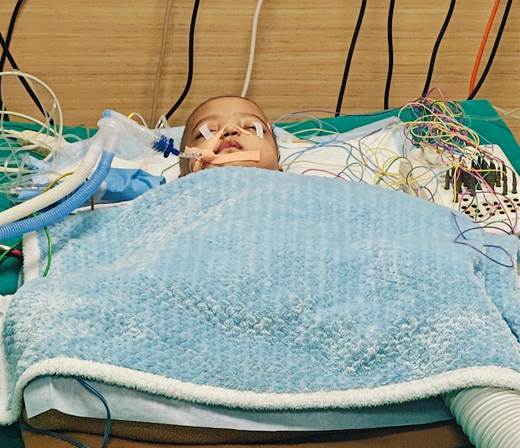
But even through the sedation…
we could see it.
His eyes twitching.
His head twitching.
Tiny repeated movements.
Seizures.
I completely broke down.
Just two days earlier he had been at home.
A little dull perhaps.
But home.
And now we were sitting in a PICU being told his brain was infected.
The doctors immediately started a 21-day intensive antibiotic course.
A lumbar puncture was also performed immediately to collect cerebrospinal fluid and understand how much the infection had spread.
Everything moved fast.
Too fast.
Neil remained intubated for almost six-seven days.
The seizures continued.
Sometimes focal seizures involving only the eyes.
Sometimes the head.
Sometimes one hand.
One leg.
But every twitch terrified us.
Because this was no longer the Neil we knew.
His activeness disappeared completely.
He became still.
Like a doll lying on the bed.
No sounds.
No reactions.
His voice disappeared.
He stopped crying.
Stopped responding.
Just lying there.
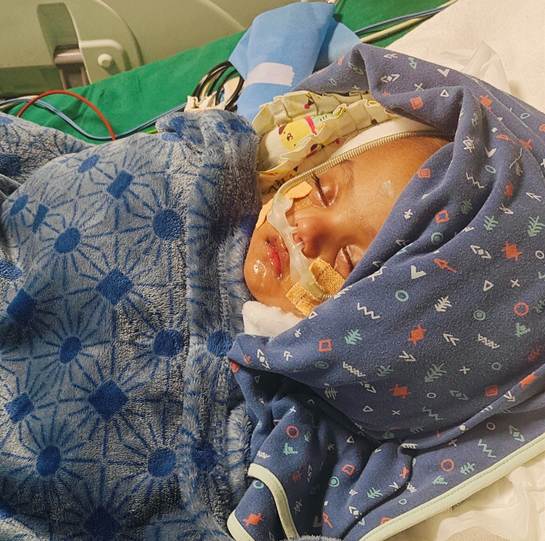
The seizures were severe enough that Neil required three anti-epileptic medications together at extremely high doses.
The PICU started maintaining a seizure chart, documenting frequency, duration, pattern.
Sometimes 20 seizures a day.
Sometimes 15.
Neurologists became regular visitors.
And slowly we learnt another terrifying term.
GCS – Glasgow Coma Scale.
A scoring system used to assess how responsive and neurologically active a person is.
Every day his responses were monitored.
Pain response. Eye opening. Movements.
Some days he wouldn’t even react to painful stimuli.
And then suddenly he would come back again.
Every tiny movement became hope.
Weeks passed.
The CSF thankfully came negative for widespread infection.
That gave the doctors some reassurance.
But the seizures continued.
And the neurologists slowly prepared us for another reality.
Neil may need anti-epileptic medications for years.
His brain had undergone significant inflammation.
And once again…
we had no emotional capacity left to process anything anymore.
Even writing this today feels cruel.
Because I had seen the happiest version of Neil.
And now I was watching him lie there motionless.
Drugged.
Sleeping.
Not responding.
I was angry.
At life.
At fate.
At myself.
At God.
I was exhausted.
Around the fourth week, another MRI was planned to assess how the inflammation was responding.
Again anaesthesia.
Again intubation.
The MRI showed partial reduction in infection.
But the inflammation persisted significantly.
The neurologists continued adjusting anti-epileptic medications carefully because these medicines themselves are extremely sedating.
Most of the time now…
Neil just slept.
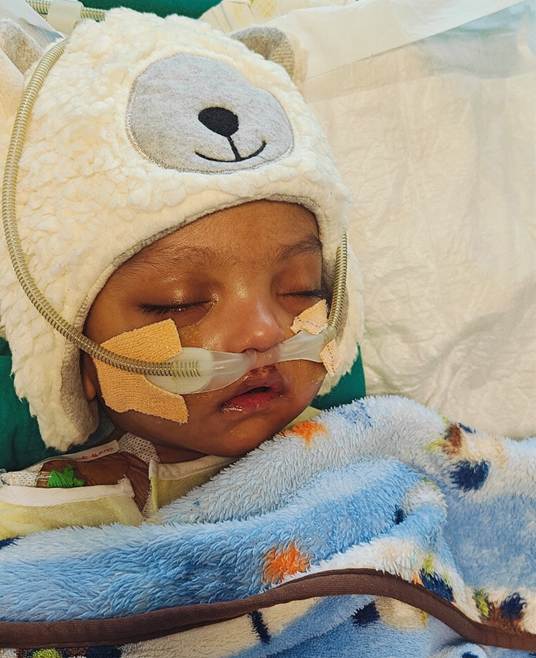
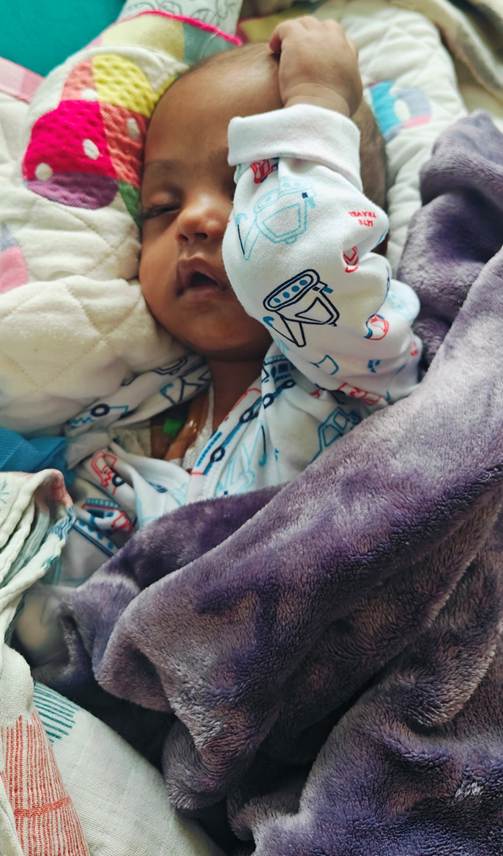
And seeing him like that after everything he once was…
was unbearable.
And then came another conversation.
Dr. Dinesh and Dr. Anil met us.
And they told us something we weren’t prepared for.
Transplant was no longer possible.
At least not now.
Because post-transplant patients require lifelong immunosuppressants, medicines that intentionally suppress the body’s immunity so the transplanted organ is not rejected.
But in Neil’s case, suppressing immunity while his brain had undergone severe infection and inflammation could lead to catastrophic complications, including brain haemorrhage.
So transplant was officially off the table.
At least for the foreseeable future.
Instead, once the inflammation settled further, the plan was to attempt bowel lengthening surgery and see whether Neil’s native intestine could somehow sustain him.
Everything had changed within three weeks.
Everything.
And we still did not fully understand why life kept doing this to him.
But through all of it…
Neil never gave up.
And somehow, looking at him, we also kept believing we would fight through this too.
30th October 2025.
Four weeks later.
It was finally decided that the seizures now had to be medically managed long-term.
Nothing more could be done in the hospital.
Discharge procedures began.
And honestly?
We were terrified.
How do you manage seizures at home?
How do you sleep?
How do you watch a child every second of every day knowing a seizure can happen anytime?
Sometimes his seizures would even affect saturation.
Which meant continuous monitoring at home too.
Life after this hospitalisation was never going to be the same again.
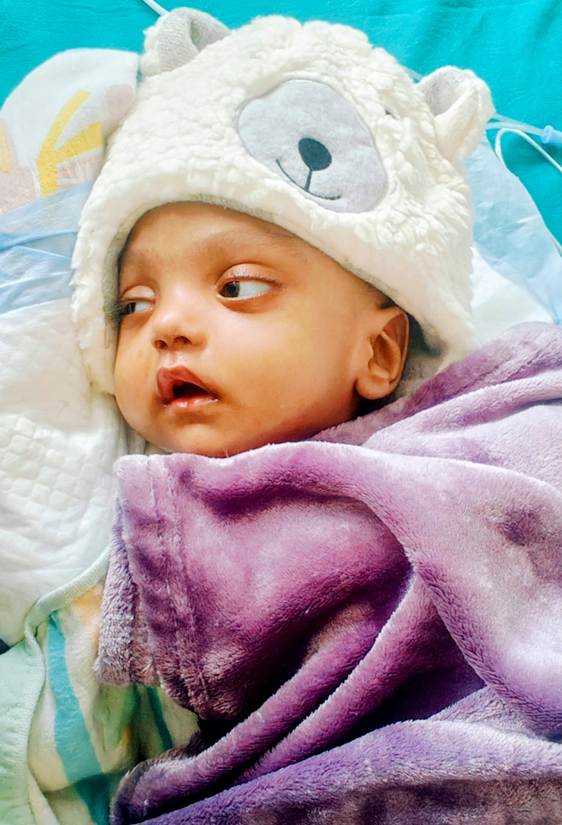
Neil came home.
With ongoing seizures.
Fluctuating sodium levels.
Dull activity.
A central line.
And a completely changed future.
But he came home.
And at that point…
that was all we held on to…


Leave a Reply