Neil came home.
But this homecoming felt different.
Because for the first time in our journey, Neil came home… but he wasn’t the same Neil who had gone into the hospital.
For the last thirty days, our lives had revolved around fungal infections, bacterial infections, seizures, MRIs, lumbar punctures, neurologists, anti-epileptic medications and conversations that seemed to grow heavier every day.
When he finally came home, we should have felt relieved.
Instead, we felt scared.
Because we were bringing home a version of Neil we did not yet know how to care for.
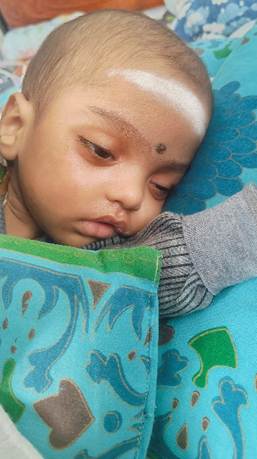
One of the biggest changes happened because his Hickman line had been removed.
The line infection had become the root cause of everything that followed, and the doctors had no option but to remove it.
But removing the Hickman line came with consequences.
Neil now needed a central line.
And unlike a Hickman line, a central line was temporary.
It needed replacement every seven to ten days.
Every ten days.
A new procedure.
A new poke.
A new line.
A new pain.
Watching him undergo one line insertion itself was enough to break me.
Now we had to prepare ourselves to watch him go through it repeatedly.
Every ten days we would have to go back to the hospital.
Every ten days he would have to endure pain again.
And what made it worse was that Neil had stopped reacting.
He had stopped crying.
I had seen Neil laugh.
I had seen him scream.
I had seen him demand attention.
I had seen him make sounds continuously.
And now…
he would simply lie there.
Quiet.
Expressionless.
Like a little doll.
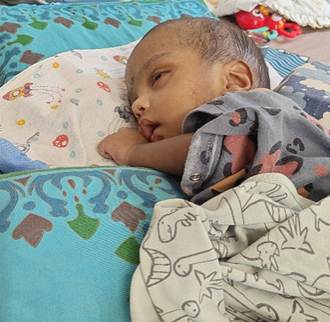
His brain infection had affected his motor responses and his vocal abilities.
The boy who once filled our house with sounds had become silent.
And that silence broke me more than anything else.
I wanted to cry.
To scream.
To ask life why.
But there were no answers.
There never were.
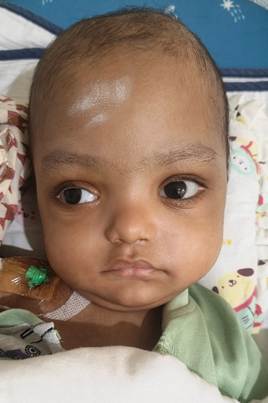
Then came another word we had to add to our medical dictionary.
Hypothermia.
During the peak of his brain injury, Neil’s body had become extremely sensitive to temperature regulation.
His body temperature would sometimes drop to 92 or 93 degrees if a blanket was removed for too long.
Even small changes in temperature affected him.
The moment his temperature dropped, we could see the chain reaction begin.
His heart rate would slowly start falling.
His responsiveness would decrease.
His GCS scores would worsen.
Sometimes he would not react even to painful stimuli.
The situation would become so alarming that doctors would start discussing intubation.
And then Dr. Dinesh would walk in.
Or we would call him.
And he would calmly say:
“Let’s warm him up first. He will be okay.”
And somehow…
he would be.
As his temperature improved, his responsiveness would slowly return.
Hypothermia became another thing we learnt to live with.
Another thing we never knew existed before Neil.
Then came sleep apnea.
The seizures had required three anti-epileptic medications.
All in high doses.
All carrying one major side effect.
Sleepiness.
And sometimes…
Neil would simply stop breathing in his sleep.
In the hospital, monitors would scream.
The respiratory rate would suddenly show zero.
That sound still haunts me.
I would immediately rush to him.
Touch him.
Shake him gently.
Call his name.
Anything to make him breathe again.
But now we were home.
There was no PICU.
No nurses.
No doctors outside the door.
Just us.
And the monitor.
We kept him connected continuously because we were terrified of missing an episode.
Imagine watching your child sleep and being afraid of whether he will take the next breath.
That was our reality.
Then came CSW — Cerebral Salt Wasting Syndrome.
The brain injury had affected Neil’s sodium regulation.
A healthy sodium level sits around 135 to 145.
Neil would sometimes drop to 118.
The moment sodium dropped, his sensorium dropped.
His activity reduced.
His seizures worsened.
His responsiveness disappeared.
We started doing sodium blood tests every alternate day.
Every report determined our mood for the day.
Every number carried meaning.
Every fluctuation carried fear.
And then there was the thing that scared us most.
Desaturation.
When Neil had severe seizures, he would stop swallowing properly.
His tongue would roll back.
His saliva would accumulate.
His airway would partially block.
And suddenly we would see the saturation drop.
Sometimes even 65.
The moment those numbers appeared, panic took over.
Oxygen.
Suction.
Positioning.
Calls.
Everything would begin immediately.
Many times Benjamin Anna would rush over.
Stabilise him.
Guide us.
Help us.
And slowly bring him back.
But every episode left us shaken.
Because we never knew when the next one would come.
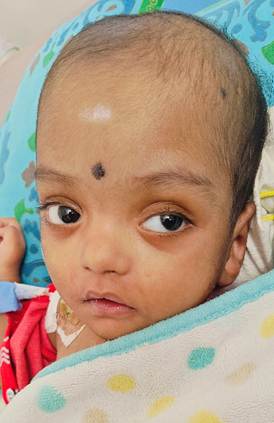
Another thing had quietly changed in me during this phase.
I stopped taking pictures of Neil.
For someone who had documented almost every little milestone, every smile, every funny expression, every tiny achievement of his journey, this was unlike me.
But somehow, every time I looked at him now, I felt he was carrying pain.
Always.
Sometimes visible.
Sometimes hidden.
The seizures had become a part of our daily life.
Some were focal seizures, just his eyes twitching, a hand moving rhythmically, a slight head turn that only we could recognise.
And some were bigger.
The kind that would immediately send us into panic.
Every seizure came with the same fear.
Is this the one that will settle?
Or is this the one that will take him away from us?
Every seizure stole a little bit of our peace.
And every time he recovered from one, it felt like we had been given another chance.
I would look at my phone camera and want to take a picture.
Then I would stop.
Because all I could think was, my baby is struggling.
Let him rest.
Let him heal.
Somewhere along the way, I stopped documenting.
I just sat beside him.
Held his hand.
Watched him sleep.
Watched him fight.
And prayed that one day I would get my smiling, mischievous Neil back.
Because despite everything that had happened, I still believed he would come back to us.
Amidst all this, we knew one thing.
If Neil had any chance of regaining what he had lost, therapy would play a huge role.
We started building an ecosystem around him.
Therapists.
Nursing support.
Monitoring systems.
Emergency preparedness.
Anything that could help him.
Because if Neil was going to fight, we wanted to make sure he had an army behind him.
And despite everything…
we never stopped believing.
Not once.
Because we had seen this boy do impossible things before.
We had seen him survive when survival seemed impossible.
So even now, we told ourselves:
This is a setback.
A massive one.
But it is still a setback.
Neil will come back.
God would not leave him here.
There would be a miracle.
There had to be.
We held onto that belief with everything we had.
Then came a day that reminded us how many people truly loved Neil.
Around mid-November, after a routine sponge bath, Neil suddenly began struggling to breathe.
I froze.
The first thing I always did in emergencies was call Benjamin Anna.
Nothing else.
Just call him.
He immediately instructed us to start oxygen and keep Neil’s jaw lifted.
We followed every instruction blindly.
Watching the saturation fluctuate.
I was terrified.
I just wanted him to breathe.
And then something beautiful happened.
Within minutes there were people everywhere.
Benjamin Anna.
Sakthi.
Manoj.
Noah.
Ambulances.
People rushing.
People showing up.
People refusing to let Neil fight alone.
That day I cried.
Not because I was scared.
But because I realised how deeply loved my son was.
He had built an army around him.
And while all this was happening…
Neil still wasn’t eating.
Transplant was no longer possible.
Immunosuppressants were too risky.
The seizures continued.
The sodium continued fluctuating.
The desaturations continued.
Everything felt like a maze.
Every direction felt uncertain.
And yet…
another door quietly opened.
We met Dr. Anil and Dr. Dinesh.
And together they proposed the next plan.
A STEP Procedure — Serial Transverse Enteroplasty.
The idea was remarkable.
Instead of transplanting new bowel, they would try to lengthen Neil’s own bowel.
His native bowel.
The little intestine he had left after everything he had gone through.
Dr. Anil explained how strategic cuts would be made to increase bowel length and improve absorption.
Neil had approximately 15 cm of usable bowel.
The hope was to get it close to 60 cm.
For the first time since transplant had been ruled out…
we had a new path.
17th November 2025.
Surgery day.
We got admitted the previous morning.
I remember holding onto one thought.
This was Sathya Sai Baba’s 100th birth year.
And somehow I convinced myself that this timing was a sign.
A blessing.
A reassurance.
I needed to believe that.
Because otherwise I would not have had the strength to sign yet another anaesthesia consent.
Neil’s brain was already injured.
Anaesthesia carried risks.
But choice?
We never really had one.
We simply signed.
And trusted.
At around 10 a.m., Neil was wheeled into the OT.
We sat outside waiting.
Every minute felt endless.
No parent ever gets used to waiting outside an operating room.
Not even after multiple surgeries.
Around noon, Dr. Anil came out.
He had assessed the bowel.
There was a rectal stricture that had been relieved.
The STEP procedure would proceed.
And then he said something that made us stop breathing for a moment.
After the procedure…
Neil may have nearly 60 to 65 cm of bowel.
And there was a chance…
he could start eating.
Eating.
Such a simple word.
Such an impossible dream.
Neil had never really experienced food.
His entire life had been TPN.
Supplements.
Medicines.
And suddenly…
eating was a possibility.
But by then life had trained us differently.
We were afraid to be happy.
Because every time happiness arrived, something else followed.
So we simply waited.
And prayed.
The hours stretched endlessly.
1 p.m.
4 p.m.
6 p.m.
8 p.m.
Neil was still in surgery.
The procedure had been completed.
The team was closing.
And because he was already under anaesthesia, another MRI was planned.
The doctors wanted to assess the brain again.
To see if recovery had begun.
Around 10 p.m., Neil was shifted to MRI.
With tubes.
Drains.
Monitors.
And all our hopes.
We prayed for two miracles that night.
A recovering brain.
And a functioning bowel.
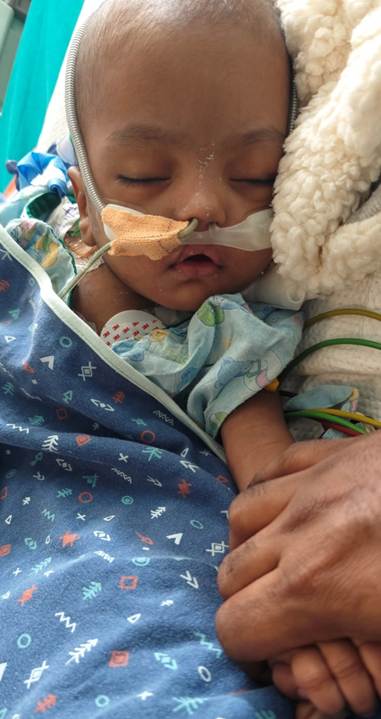
When he finally returned to PICU, my heart shattered.
The incision stretched across his abdomen.
A large cross.
Drains everywhere.
A urinary catheter.
An epidural for pain.
His body swollen from prolonged anaesthesia.
He looked so small.
And the surgery looked so big.
I remembered my own C-section.
I remembered how difficult it was to move.
And here was my thirteen-month-old son carrying something far greater.
I kept asking questions that had no answers.
Would he be able to tell us he was hurting?
Would he even be able to express pain anymore?
How much more was this child expected to endure?
Where was mercy?
Where was kindness?
Around 3 a.m., he was extubated.
His face showed pain.
Even if he could not express it the way he once did.
I could see it.
And I sat beside him feeling completely helpless.
But amidst everything…
there was one piece of good news.
The bowel had been lengthened.
Neil now had approximately 65 cm of bowel.
And for the first time in his life…
there was a genuine possibility that one day he could eat.
One day he could know what food tasted like.
One day he could experience something every other child took for granted.
And after months of disappointment…
that hope felt precious.
We had no idea what recovery would look like.
We had no idea what lay ahead.
But once again…
Neil had earned himself
one more chance.


Leave a Reply